If you've started hearing talk about large solar farms around Beverley and the surrounding villages, you're not alone. East Yorkshire is quickly becoming a key area for renewable energy projects, but many people still aren't clear on what's being planned — or how it could affect them.
Here's a straightforward breakdown of what's going on.
What's being proposed?
There are two major solar farm developments in the pipeline, both large enough to be decided at a national level rather than by the local council.
The first is the Pear Tree Hill Solar Farm by RWE. This would sit between places like Tickton, Wawne, and Woodmansey, generating around 320MW of electricity. It also includes battery storage and promises biodiversity improvements and a £4.2 million community fund. A final decision is expected in July 2026.
The second — and larger — proposal is the Clean Air Solar Farm. This would cover a huge area (around 2,500–2,800 acres) near Walkington, Skidby, and Little Weighton, generating up to 500MW. It's still in the earlier consultation stage, but it's already drawing a lot of attention.
Why are people concerned?
Several key issues keep coming up in conversations locally.
One of the biggest is the loss of farmland. Much of the land identified is high-quality agricultural land, and many feel it shouldn't be taken out of food production.
There's also concern about the sheer scale. These aren't small solar installations — they're vast sites, with some comparing them to entire villages. For many, it feels like too much is being concentrated in one area.
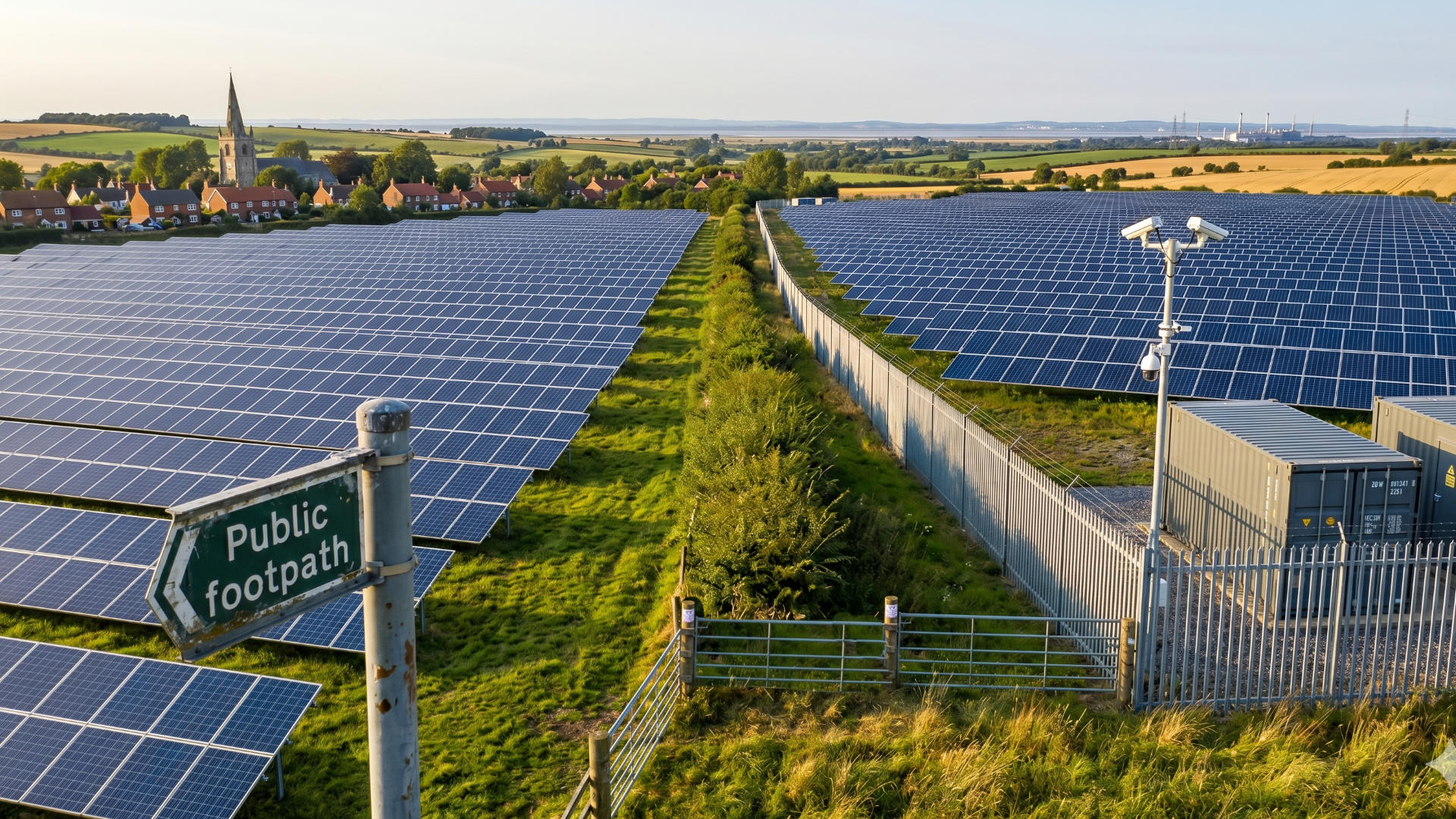
The visual impact is another sticking point. Solar panels, fencing, CCTV, and battery units could significantly change the look and feel of the countryside, particularly near the Yorkshire Wolds.
Then there's frustration about how decisions are made. Because these projects fall under national infrastructure rules, the final say sits with central government, not East Riding of Yorkshire Council. That's left some residents feeling like their voices don't carry much weight.
Some people are also asking a simple question: why not use brownfield land, warehouses, or rooftops instead?
Who's speaking up?
Opposition has mainly come from residents — particularly those in the villages directly affected. That includes farmers, long-term homeowners, and community groups who feel strongly about protecting the area.
Groups like ERASE and local campaign teams have been actively organising, raising funds, and working with planning experts. There's also been political backing, with local MP Graham Stuart raising concerns in Parliament.
That said, views aren't the same everywhere. In more urban areas like Hull, and among younger residents, there tends to be more support for renewable energy — even if it comes with trade-offs.
What happens next?
While the council doesn't make the final decision, it still plays an important role in representing local concerns and reviewing the impact of these developments — especially with multiple projects happening around the same area.
If approved, the council would also be involved in overseeing environmental measures and the distribution of community funds.
A chance to find out more
One thing that's become clear is that many people don't know much about these proposals yet — or aren't sure whether they can have any influence.
To help with that, a local drop-in session has been organised:
Drop-In Session
Thursday 18 June, 7:00 pm- 9:30 pm
Ferguson Fawsitt, Walkington
This is a chance to get up to speed before the official Public Information Days (22–24 June). The session will include multiple stations where you can quickly learn about the key issues and ask questions — it should take only around 30 minutes.
After recent events in Beverley, organisers say many people were either unaware of the plans or felt nothing could be done. Local groups strongly believe that's not the case — and that these early stages are important in shaping what happens next.
If you want to understand what's being proposed and how it could affect you, it's well worth attending.